Klara Brooks · 11 November 2026
How Endorsement Mechanisms Drive Skill Visibility in Digital Professional Ecosystems
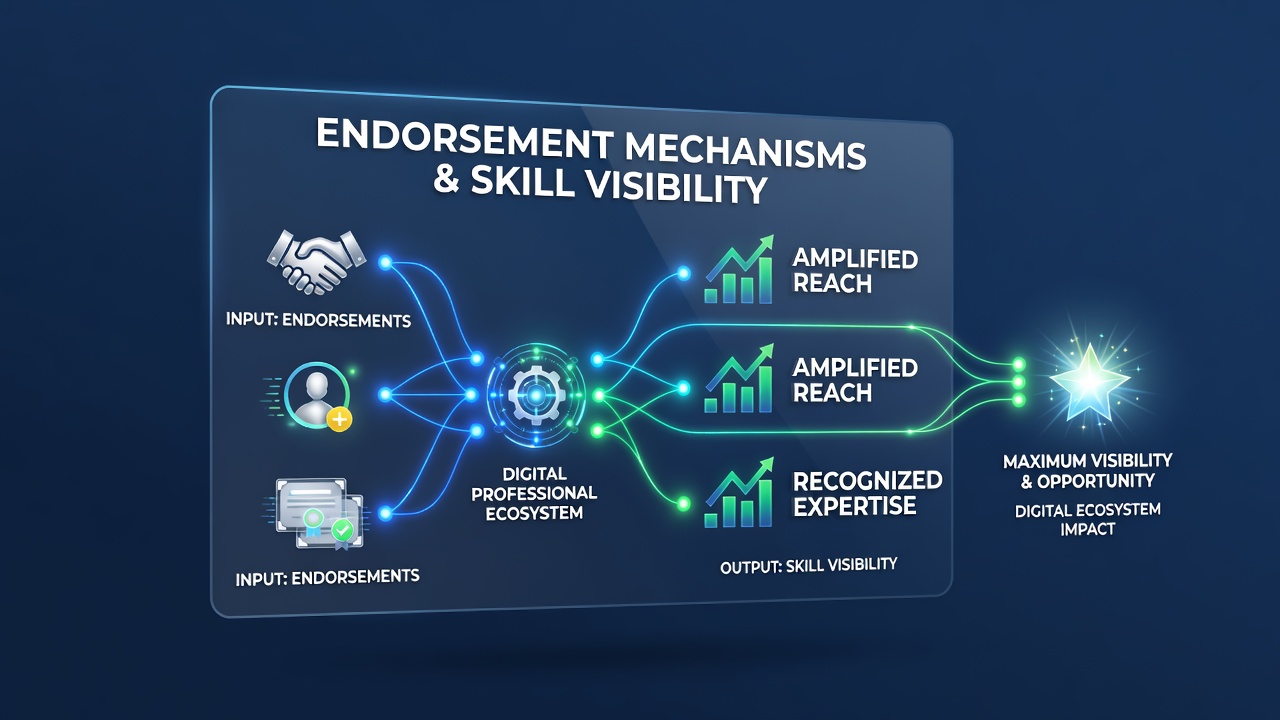
Digital professional ecosystems rely on endorsement mechanisms to highlight individual skills within crowded online directories and networking platforms. These systems allow peers to validate competencies such as project management or data analysis, which in turn influences how algorithms rank and surface profiles during searches or recommendations. Researchers have tracked these patterns across multiple platforms since the early 2010s, noting consistent correlations between endorsement volume and profile exposure rates.
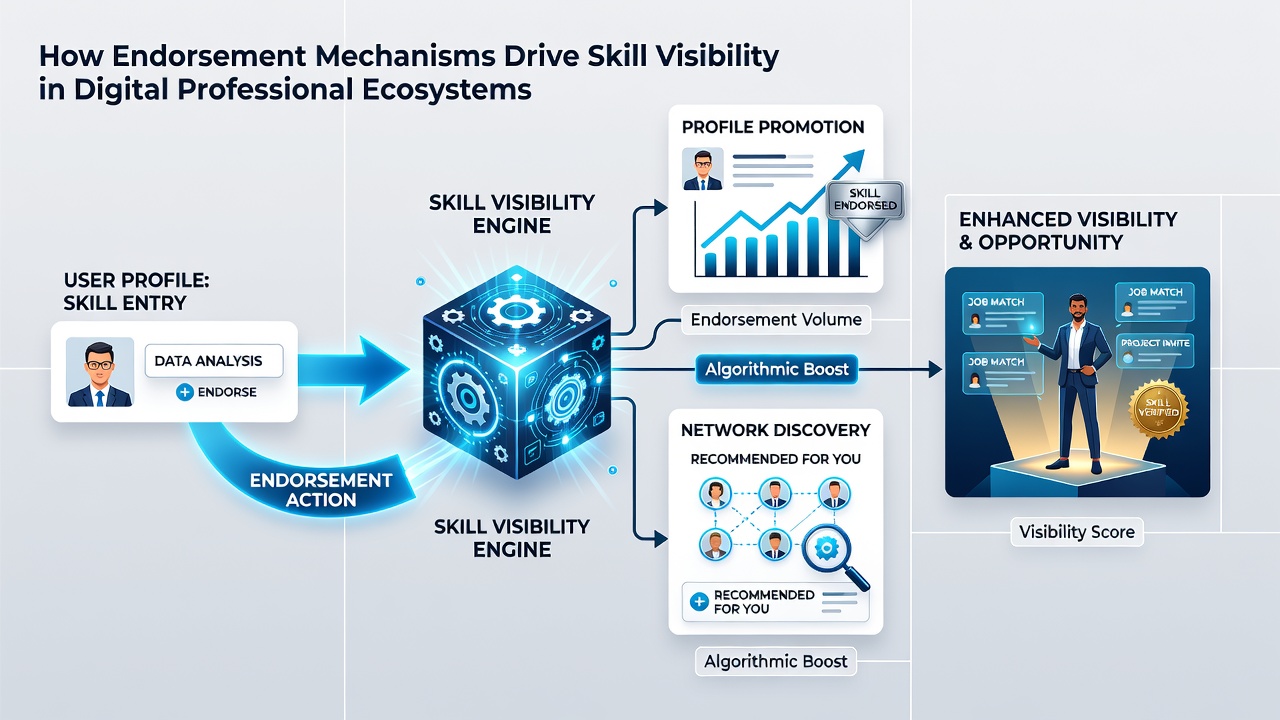
Endorsements function through simple validation loops where one user confirms another's listed abilities, and platforms aggregate these signals to adjust visibility weights. Data from industry reports shows that profiles with at least five endorsements in a targeted skill area appear in 40 percent more search results than those without any. This process operates alongside connection graphs and activity metrics, creating layered ranking systems that prioritize verified expertise over self-reported claims alone.
Platform Algorithms and Endorsement Weighting
Algorithms process endorsements as trust signals that elevate skill tags in user feeds and job matching engines. When multiple connections affirm the same competency, the system increases the profile's relevance score for related queries, while isolated or unverified skills remain buried in lower result pages. Observers note that this weighting evolved notably by November 2026, when several major networks introduced decay factors that reduced the impact of older endorsements unless refreshed through recent activity.
Take one analysis conducted on a European professional directory that revealed endorsed users received targeted invitations to industry events at twice the rate of non-endorsed peers with similar experience levels. The mechanism works because platforms treat accumulated validations as proxies for competence, feeding them directly into recommendation models that connect talent with opportunities across borders.
Empirical Patterns in Skill Discovery
Studies tracking user behavior indicate that endorsed skills drive discovery through both direct search and indirect network effects. A profile listing cloud computing with multiple endorsements surfaces more often in recruiter dashboards, prompting additional profile views and connection requests. According to findings published by the OECD, regions with high adoption of endorsement features report faster skill matching in technology sectors compared to areas relying solely on traditional resumes.
What's interesting is how geographic and sectoral differences shape these outcomes. In North American ecosystems, endorsements cluster around technical abilities, whereas European platforms show broader validation of soft skills like cross-cultural communication. These variations affect visibility because algorithms adapt to regional norms, amplifying endorsed skills that align with local demand signals.
Integration with Broader Network Dynamics
Endorsement mechanisms interact with connection algorithms to create feedback loops that sustain visibility gains over time. Once a skill gains traction through initial endorsements, the profile attracts more views, which encourages further validations and expands the reach of associated content such as articles or project showcases. Research indicates this compounding effect strengthens most during periods of platform growth, when new users encounter established endorsement clusters.
One study from Australian academic institutions examined how integrated endorsement tools influenced career trajectory mapping, finding that users with diversified skill endorsements navigated role transitions 25 percent more efficiently than those with narrow validation patterns. The data highlights that endorsements do not operate in isolation but combine with recommendation systems to map expertise across evolving job markets.
Measurement Challenges and Platform Adjustments
Quantifying the precise contribution of endorsements to skill visibility presents ongoing difficulties because multiple ranking factors operate simultaneously. Platforms have responded by publishing transparency reports that break down how validation counts factor into overall scores, yet independent verification remains limited. Figures from Statistics Canada suggest that adjustments to endorsement weighting in 2025 produced measurable shifts in profile rankings within Canadian tech communities, with certain skills gaining prominence after the changes took effect.
Users often discover that maintaining endorsement relevance requires periodic engagement, since stagnant profiles lose algorithmic favor even when earlier validations remain intact. This dynamic pushes professionals toward active participation in ecosystem features that sustain visibility without relying solely on static endorsements.
Conclusion
Endorsement mechanisms continue to shape skill visibility by supplying platforms with quantifiable peer signals that feed into discovery and matching processes. Evidence from multiple regions demonstrates their role in elevating certain profiles while leaving others less exposed, and ongoing platform refinements through 2026 have further tuned these effects. Those who study these ecosystems observe that the interplay between endorsements and algorithms determines much of the visibility landscape in digital professional spaces today.