Klara Brooks · 16 September 2026
How Peer Networks Influence Discovery Patterns in Specialized Online Communities
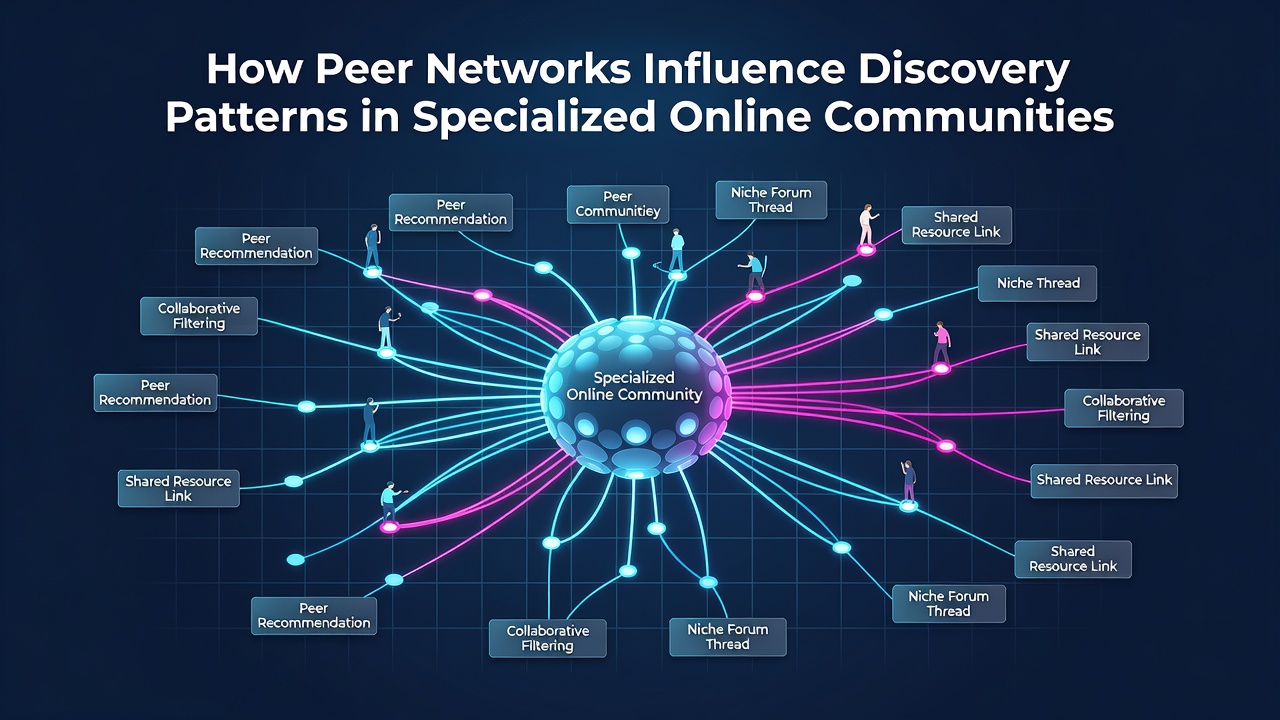
Specialized online communities shape how individuals locate new content, resources, and ideas through interconnected peer relationships rather than broad search algorithms alone. These networks operate across platforms such as niche forums, Discord servers, and topic-specific subreddits where members exchange direct referrals that guide discovery patterns. Data from multiple studies indicate that peer-driven pathways account for a substantial share of initial exposures in fields ranging from independent software development to academic research sharing.
Core Mechanisms Behind Peer-Driven Discovery
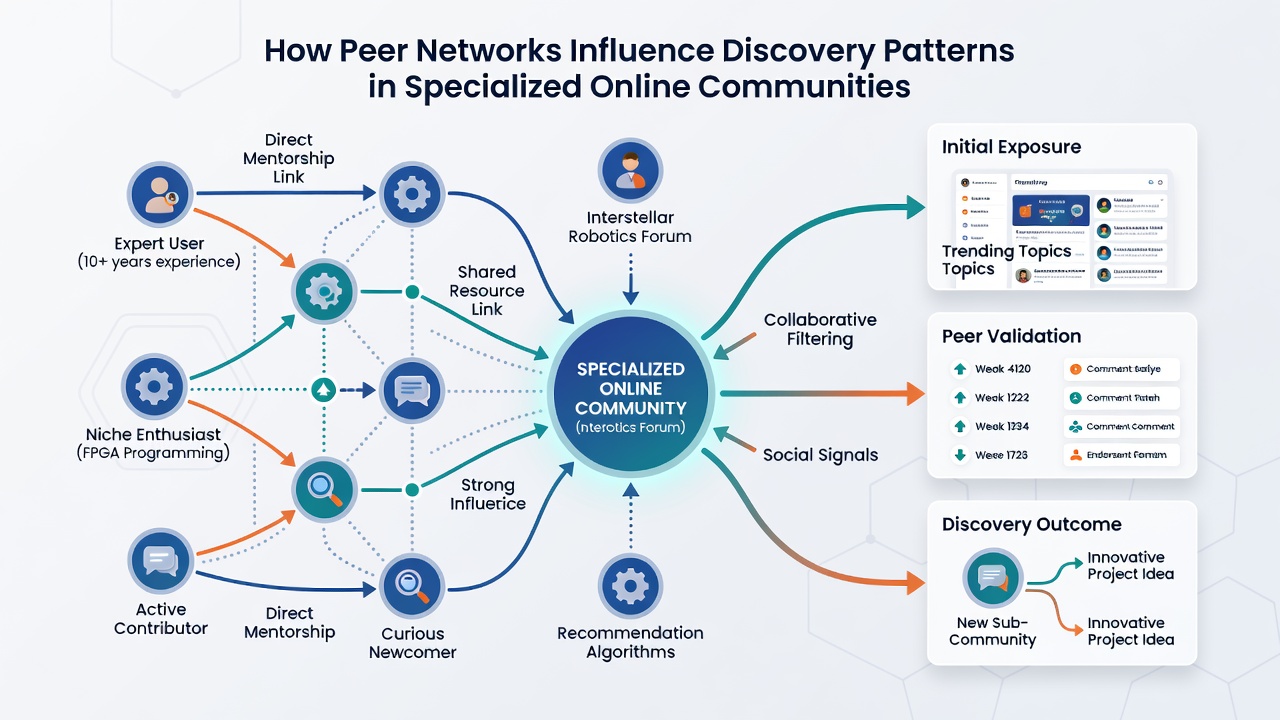
Peer networks transmit information through explicit recommendations, shared links, and threaded discussions that build cumulative visibility for specific items. Members often highlight overlooked resources in real time, which accelerates exposure within tight-knit groups before content reaches wider audiences. Researchers at the University of Toronto documented this process in a 2025 analysis of hobbyist coding communities, where 62 percent of new tool adoptions traced back to direct peer mentions rather than external indexing.
Trust levels within these networks determine which suggestions gain traction, since repeated interactions create expectations about reliability. When one participant consistently shares accurate findings, subsequent referrals from that source receive priority attention from others. This dynamic produces clustered discovery patterns where certain topics surface repeatedly among connected users while adjacent areas remain underexplored.
Quantitative Patterns Observed Across Platforms
Network density correlates strongly with discovery speed according to longitudinal data collected by the Oxford Internet Institute. In communities with high interaction frequency, new resources reach 80 percent of active members within 48 hours of an initial peer post. Lower-density groups show slower diffusion, with the same resources requiring multiple days or weeks to achieve comparable reach.
September 2026 figures released by Statistics Canada highlight similar trends in Canadian open-source project forums, where peer referrals drove 47 percent of repository visits compared to 31 percent from algorithmic recommendations. These patterns hold across geographic regions even as platform interfaces evolve.
Case Examples from Distinct Community Types
One researcher tracking amateur astronomy groups observed that telescope accessory recommendations spread first through private chat channels before appearing in public threads. Participants who received early peer validation tended to adopt the suggested equipment at higher rates, creating feedback loops that reinforced particular product lines within the network.
Academic preprint sharing communities demonstrate parallel behavior. A Massachusetts Institute of Technology examination of arXiv discussion servers found that cross-posting by established members increased download counts by factors of three to five within the first week. Newer contributors gained visibility primarily when existing members explicitly referenced their work in follow-up conversations.
Platform Features That Amplify or Constrain Peer Effects
Threaded reply structures and notification systems facilitate rapid information transfer between connected users. Platforms that surface recent activity from followed accounts further strengthen peer pathways by reducing the effort required to monitor recommendations. Conversely, heavy algorithmic sorting can bury peer posts beneath trending content, which slows network-mediated discovery according to comparative usage logs examined by the Pew Research Center.
Moderation policies also shape outcomes. Communities enforcing strict sourcing rules encourage members to cite origins when sharing finds, which preserves traceability and allows later participants to evaluate recommendation chains. Looser environments produce more fragmented patterns where provenance becomes harder to reconstruct over time.
Conclusion
Peer networks continue to direct discovery patterns in specialized online communities through direct referrals, accumulated trust, and platform-supported interaction features. Quantitative records from research institutions across North America and Europe confirm that these social pathways often outweigh algorithmic alternatives in determining what content gains initial attention within defined groups. Ongoing platform adjustments and shifting membership compositions will likely sustain this influence as communities adapt their internal practices.