Klara Brooks · 14 October 2026
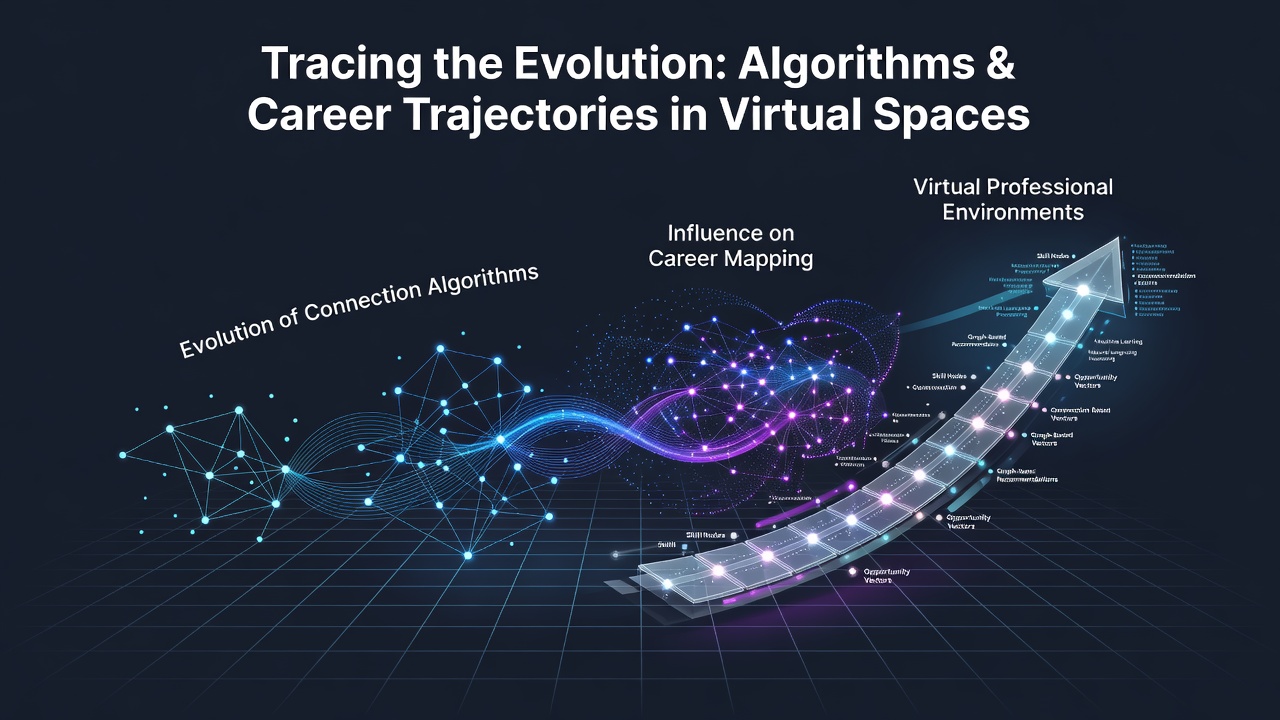
Tracing the Evolution of Connection Algorithms and Their Influence on Career Trajectory Mapping in Virtual Professional Environments
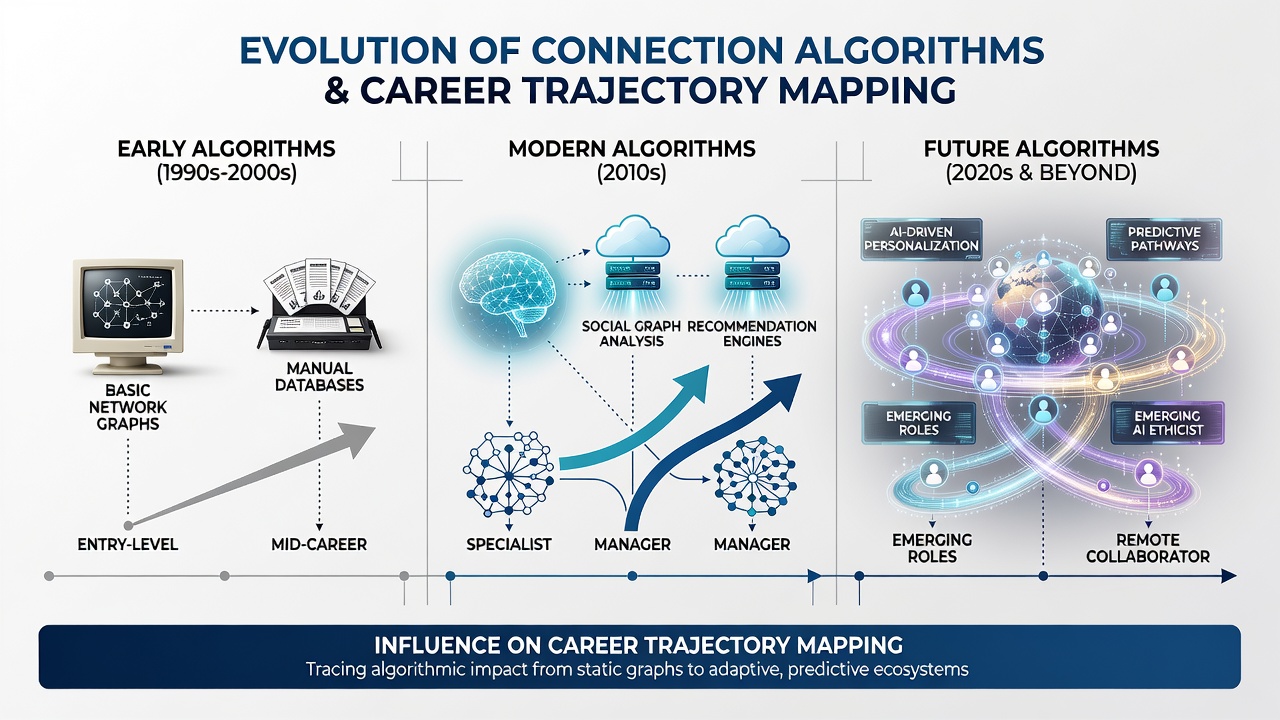
Connection algorithms in virtual professional environments began with simple directory listings and basic search functions during the late 1990s and early 2000s, when platforms matched users primarily through self-reported job titles and industry categories. Researchers have documented how these initial systems expanded as network sizes increased, incorporating graph theory principles to identify indirect connections through mutual contacts and shared affiliations. Data from multiple studies shows that by the mid-2000s, algorithms started weighting factors such as profile completeness and activity levels to surface potential collaborators or mentors.
Early Algorithmic Foundations
Observers note that foundational systems treated professional networks as static databases, where queries returned results based on exact matches rather than inferred relationships, yet platform growth quickly demanded more dynamic approaches. Academic analyses reveal that early implementations drew from social network analysis techniques developed in sociology departments at various universities, which allowed for basic pathfinding between users who shared educational backgrounds or geographic locations. Those who've examined archived platform data point out that recommendation engines at this stage operated on rule-based logic, flagging users who listed overlapping skills without considering temporal changes in employment status.
Integration of Machine Learning
Platform developers introduced machine learning models around 2010 that analyzed interaction histories, including message response rates and content engagement patterns, to refine connection suggestions. Evidence indicates these models improved accuracy by factoring in behavioral signals alongside explicit profile data, while updates in subsequent years added natural language processing to parse job descriptions and user posts for deeper semantic matching. Research indicates that such advancements enabled trajectory mapping tools to project likely career moves by comparing a user's current position against historical paths of similar profiles in the network.
Expansion into Predictive Career Tools
Virtual environments began embedding career trajectory features that visualized potential progressions, drawing on aggregated anonymized data to highlight common transitions between roles and industries. Studies found that algorithms now incorporate external signals such as economic indicators and sector growth rates to adjust recommendations dynamically, and this integration became more pronounced following regulatory shifts in data handling across multiple jurisdictions. One study revealed that users who engaged with these mapping visualizations reported higher rates of targeted skill acquisition aligned with projected opportunities.
According to the European Commission, platform accountability measures have influenced how connection algorithms disclose their ranking criteria, prompting refinements that balance user privacy with recommendation relevance. Figures from industry reports show increased adoption of these tools in regions outside traditional tech hubs, where professionals leverage them to identify cross-border opportunities without physical relocation.
Developments Observed in October 2026
Updates released in October 2026 incorporated real-time labor market feeds from government statistical agencies, allowing algorithms to recalibrate career maps in response to emerging job categories and skill demands. Researchers discovered that these enhancements reduced mismatches between suggested connections and actual employment outcomes by integrating longitudinal datasets that track career longevity rather than short-term placements. What's interesting is how platforms now surface alternative pathways, such as lateral moves or entrepreneurial routes, based on patterns observed across millions of user histories.
Industry organizations have tracked the spread of these features into specialized communities, where niche platforms apply domain-specific weighting to connection scores, for instance emphasizing publication records in academic networks or project portfolios in creative fields. Data shows that such specialization supports more precise trajectory projections, although interoperability challenges persist when users move between different virtual environments.
Conclusion
The progression from basic matching to sophisticated predictive systems demonstrates how connection algorithms have reshaped the ways professionals identify and pursue opportunities within digital spaces. Ongoing refinements continue to draw on diverse data sources to enhance accuracy while addressing regulatory requirements across regions. Those monitoring these developments note sustained interest in tools that translate network insights into actionable career strategies.